I have built a life and a body of work from a single philosophical conviction: that the fundamental condition of human existence, at every scale, in every context, across every system, is tension. The tension between agency and constraint. Between what a person, an institution, a political system, or a society is capable of becoming and what the forces surrounding it will permit it to be.
That conviction did not begin as a theory. It began as a lived experience. But in the years of practising political analysis, conducting research, advising institutions, and accompanying individuals through their most significant transitions, I have found the same dynamic operating at every level of human organisation. The tension is not unique to the individual trying to reclaim their life. It is structurally present in every political system attempting to maintain legitimacy under conditions of instability. In every institution trying to survive in an environment it did not design. In every society navigating the distance between what it claims to be and what it actually does.
This is the Subsoil philosophy. A theory of the human condition that is equally at home in a political risk assessment and a coaching session because the same forces are at work in both.
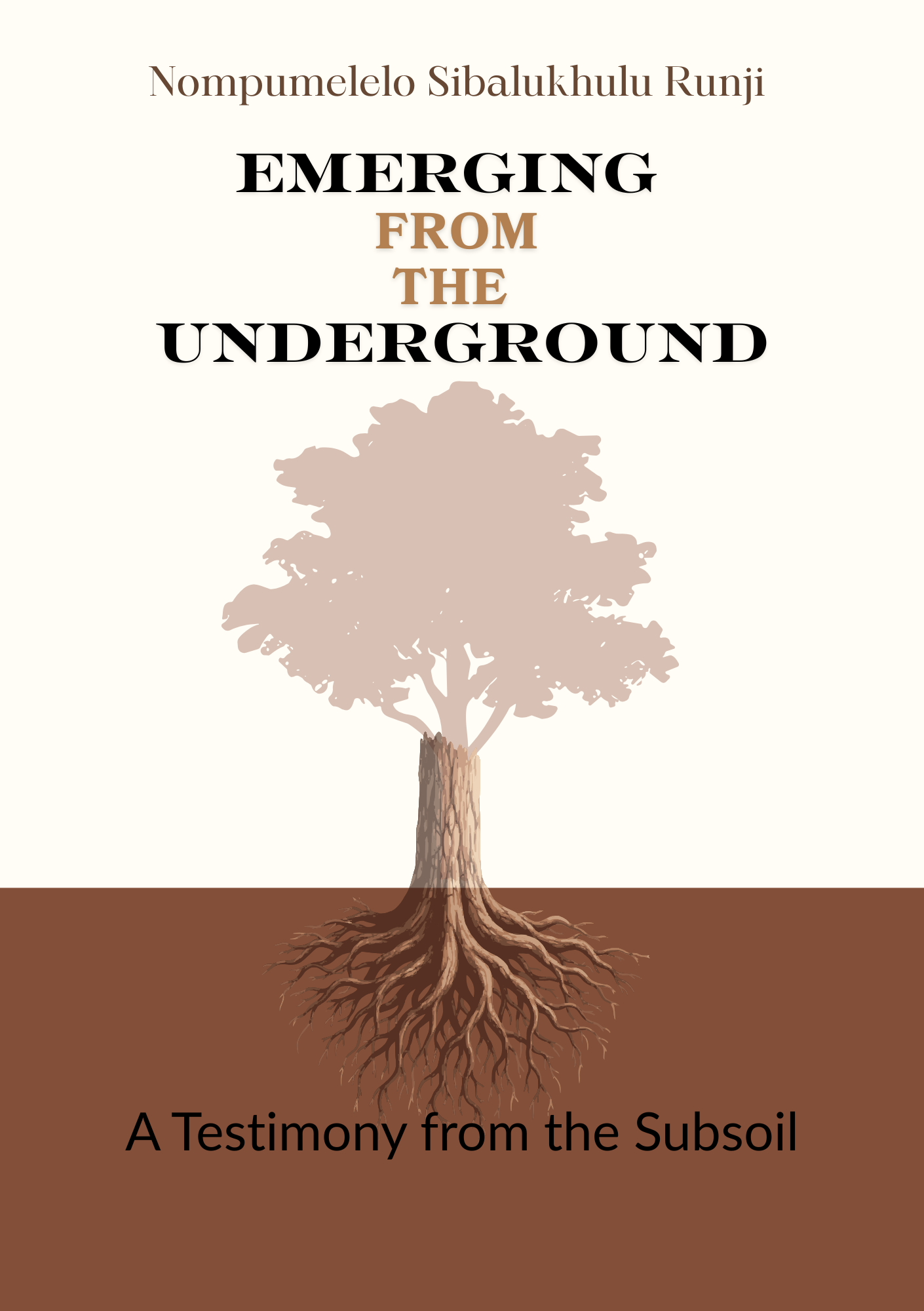
The image is a tree. The tallest trees have the deepest roots. Most people read this as an inspirational claim about resilience. I read it structurally. The quality of the rooting — the reach for nourishment in the dark, the resistance to thin soil, the willingness to go further underground in order to grow higher — determines the nature of what shows up and grows above ground.
Every political system has a subsoil. The visible drama of elections, legislation, and institutional behaviour is the canopy. Beneath it lies the actual configuration: the distribution of power, the fault lines of legitimacy, the historical compactions that determine how the system will behave under pressure. I have spent two decades reading that subsoil for investors, governments, foundations, and civil society organisations. The canopy tells you what is happening. The subsoil tells you why and what is coming.
Every institution has a subsoil. The formal strategy, the articulated mission, the public facing identity: these are the canopy. Beneath them lies the actual condition, the inherited assumptions, the unexamined contradictions, the organisational compactions that no strategy document has ever dislodged because no one has gone underground to find them. I do that underground work with organisations, tracing the root system before building the architecture that is supposed to hold.
Every individual life has a subsoil. The performed identity, the professional competence, the public accomplishment: the canopy. Beneath it, the forces that shaped the self before it had a say in the shaping. I accompany individuals through the excavation of that subsoil, the honest, sustained grappling that precedes any emergence worth the name.
The architecture that holds this philosophy has four movements.
- The Question Most of us, when asked who we are, answer with what we do. Profession. Role. Function. But this is the canopy, not the root. The Subsoil framework begins with the refusal of that answer and the insistence on a harder one: not what do you do, but who are you.
- The Tension The who is forged in the tension between agency and constraint. Agency is what is in the heart of the seed, the inclination to think, to be, to act from that being. Constraint is the soil, the water, the sun: the exogenous forces that help or hinder the emergence of what is within. In political systems, these forces are structural and historical. In institutions, they are environmental and competitive. In individual lives, they are familial, cultural, relational, and systemic. In every case, the same duel is taking place underground.
- The Grappling How well the seed holds its own against the soil conditions, how it negotiates the nurture and resists the compaction, is what the Subsoil Work is. This is not passive endurance. It is active excavation. Aeration: the deliberate loosening of what has been packed too tight. Unmasking: naming what has been hidden, in systems and in selves. Root depth: the quality and honesty of the underground grappling that determines whether what emerges above ground will hold.
- The Knowing What the underground work produces is not merely a feeling of liberation. It is knowledge. Subsoil knowing, whether that is an organisation understanding the actual conditions of its own existence, a political analyst understanding the structural forces beneath a governance crisis, or an individual understanding what has shaped their relationship to power, is the actionable intelligence that only becomes available after someone has been underground honestly and stayed there long enough to retrieve what is true.
I do not argue for this philosophy from theory. I argue for it from practice, across every register in which I work.
Two decades of political intelligence practice have demonstrated that the most consequential forces in any political environment are underground. The formal institutions, the official narratives, the documented policy positions are the canopy. The real analysis begins beneath them, in the informal distributions of power, the historical compactions of legitimacy, the structural conditions that the surface presentation is designed to manage or conceal. My political intelligence work is Subsoil work applied to systems.
My experience in research and advisory practice with institutions has demonstrated that organisations cannot build strategy that holds without first doing the underground work on themselves. Most institutional failure is not a failure of ambition or execution. It is a failure of self-knowledge, of organisations that have not been underground honestly and therefore do not know what they are actually rooted in. My advisory work is Subsoil work applied to institutions.
And my own life, rendered in the memoir How I Took Back My Power and in the coaching practice that emerged from it, is the testimony of Subsoil work applied to the individual. It is one piece of evidence. It is not the only piece. But it is the most honest evidence available to me, and honesty is the condition on which all of this rests.
One philosophy. One method. Four contexts. The scale changes. The question does not: what lies beneath, and what becomes possible when you go there honestly?
When I read a political system, I am reading the subsoil beneath the surface, the invisible tensions that determine how power will behave when the pressure arrives.
When I advise an institution, I am accompanying it through the underground work it has not yet done, the self-knowledge without which no strategy holds.
When I coach an individual, I am doing what I have always believed: that the private, honestly reckoned with, is the most powerful form of the public.
When I write, whether in political analysis, memoir, or philosophy, the Subsoil work is happening in language. Writing is the practice of going underground in words, reaching beneath the surface of what is easily said for what is true. Every column, every piece of analysis, every act of rendering an argument on the page is an act of aeration: naming what has been hidden so that it can be seen clearly.
A Testimony from the Subsoil
The full philosophical articulation of this framework. Not a self-help book. A philosophical argument about the human condition, about agency and constraint, about what compaction costs, and about what becomes possible when someone goes underground honestly and does the work. Grounded in personal testimony because that is the register in which the argument is most truthful. But the argument it makes is structural and universal.
Read the philosophy →